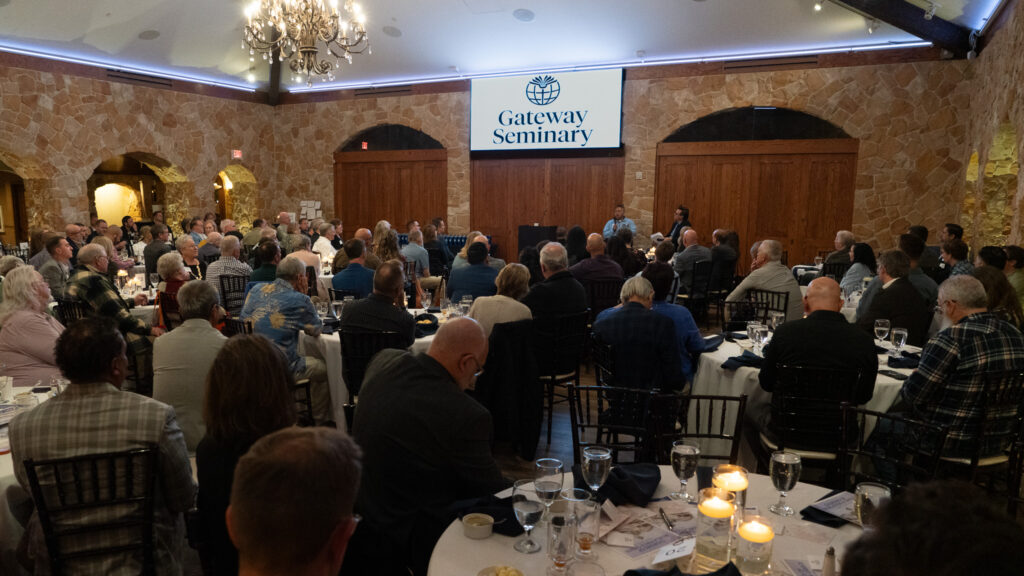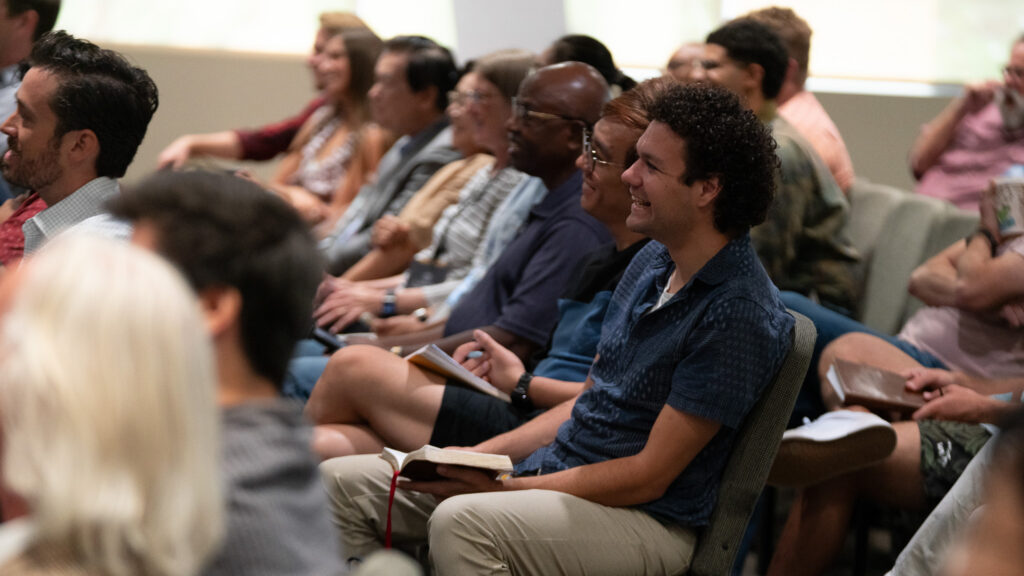
ONTARIO, Calif. — Christians should reject the illusion of self-sufficiency and find joy in their complete dependence on God, Gateway Seminary President Adam Groza told students, faculty and staff during the seminary’s fall President’s Convocation Aug. 27.
Speaking from Acts 17:22-34, Groza said dependence is often viewed negatively in a culture that prizes independence. Scripture, however, presents dependence on God as a source of joy in life, ministry and Christian community.
“God’s Word wants us to know that, as His children, we depend on Him, and that is good because He is good,” Groza said. “God is loving and gracious, and dependence is a great source of joy in life and in ministry and in community.”
Groza encouraged members of the Gateway community to remember that God will place them in situations that teach them to rely on Him.
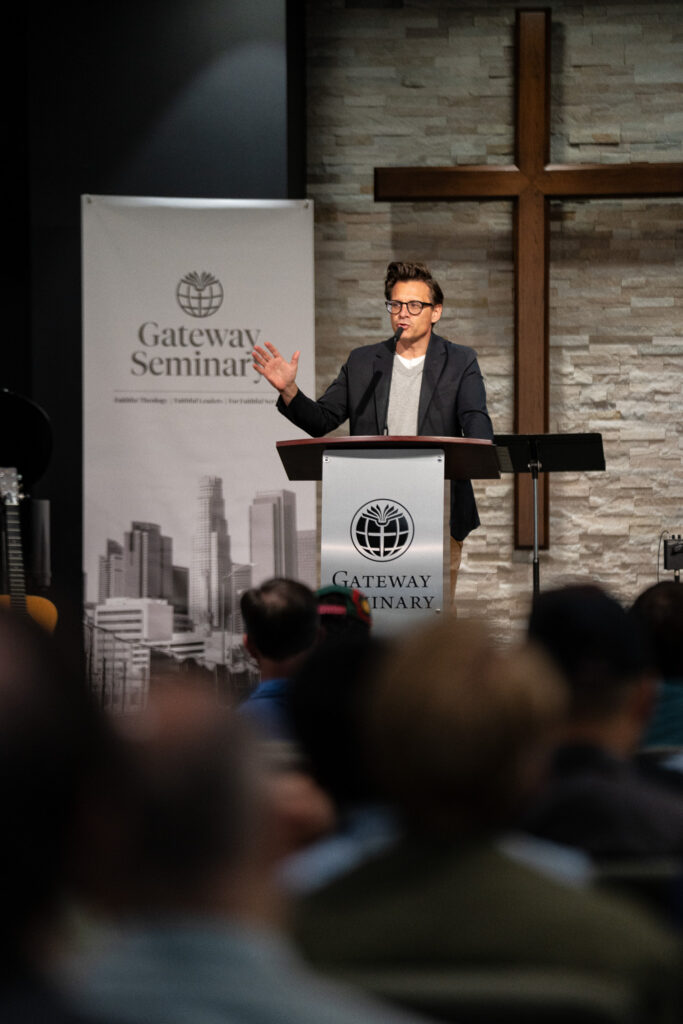
“In life and in school and in ministry, God is going to put you in situations to teach you or to remind you to be joyfully dependent on Him,” he said.
Before delivering the convocation message, Groza announced Gateway had begun the fall semester with the largest enrollment in the seminary’s history. He also celebrated the launch of Gateway’s Hawaii campus, which opened with classes on three islands, and announced the completed sale of the seminary’s former Fremont property. Proceeds from the sale will support seminary operations and student scholarships.
Turning to Paul’s address at the Areopagus in Acts 17, Groza contrasted biblical dependence with what he called “the delusion of self-sufficiency.”
“God doesn’t need anything from us,” he said. “We need everything from Him. God is self-sufficient, and Christ, for those who believe, is all-sufficient.”
Groza noted that Paul’s encounter in Athens occurred while he was waiting for Silas and Timothy. Instead of wasting the time, Paul looked for opportunities to proclaim the Gospel.
“While he’s waiting for what’s next, he’s looking for Gospel opportunities,” Groza said. “What could have been wasted time turns into one of the most powerful moments in the history of Christianity.”
Paul was provoked by the city’s idolatry, but his concern did not result in detached criticism, Groza said. Rather, it moved him to proclaim Jesus and the resurrection.
Groza described Paul’s response as “unsettled love.”
“Paul, in effect, is saying, ‘I love you. I’m upset. I’m going to point you to Jesus,’” he said. “He doesn’t stew. He doesn’t just sit in his mind like a Pharisee and say, ‘Glad I’m not like them.’ He loves them. He’s unsettled. He points them to Christ.”
Paul’s sermon also provides a model for communicating the Gospel to people without biblical knowledge, Groza said. Beginning with creation, Paul explained humanity’s common origin, the problem of sin and the need for repentance before pointing his hearers to Christ’s resurrection.
“We all have the same problem, sin, and for the problem of sin, there is one solution, and that is Jesus Christ,” Groza said.
“In this very short speech, we have creation, fall, redemption and restoration,” he continued. “We know it’s true because Jesus died for sinners and God raised Him from the dead.”
Groza identified Acts 17:28 — “In Him we live and move and have our being” — as a concise expression of humanity’s total dependence on God.
“When you know you are totally dependent, then you can be joyfully dependent,” he said. “Apart from Him, we are nothing. Apart from Him, we have nothing. Apart from Him, we can do nothing.”
Dependence on God is both personal and practical, Groza said. God is the source of physical and spiritual life, the provider of strength and the sustainer of all creation. Christians therefore should not merely acknowledge their dependence intellectually but demonstrate it in the way they worship and live.
Groza also warned that faithful ministry can be costly. Paul’s experience in Athens produced a mixed response: some mocked, some wanted to hear more and others believed. Yet the encounter also deepened Paul’s reliance on God as he continued to Corinth “in weakness and in fear and much trembling,” as described in 1 Corinthians 2.
“Part of ministry is what God does through us, but don’t ever forget that part of ministry is what God does in you,” Groza said.
Groza offered three reasons Christians can rejoice in their dependence: their faith rests in God’s power rather than human wisdom; God’s power is made perfect in weakness; and the impact of ministry depends upon the Holy Spirit working through God’s Word.
Quoting C.S. Lewis’ description of Christians as “jolly beggars,” Groza urged the Gateway community to embrace its need for God.
“Be someone who knows you are totally dependent, rejoicing in your total dependence,” he said.
“We live in joyful dependence by looking to Jesus in faith, by abiding in His Word, loving as He loved, obeying as He obeyed and letting the Word of God dwell richly in us,” Groza concluded. “We would embrace that joyful dependence, not in the illusion of self-sufficiency, but as jolly beggars, knowing that apart from Him, we can do nothing.”
–30–